
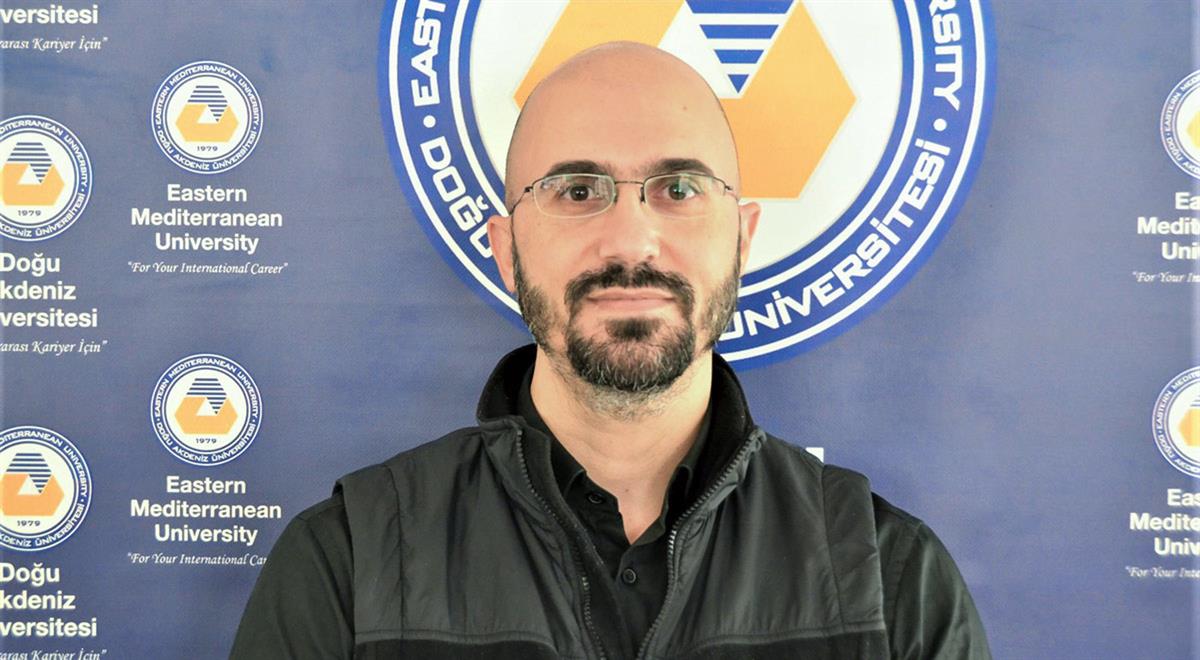
Eastern Mediterranean University (EMU) Faculty of Engineering, Department of Computer Engineering academic staff Prof. Dr. Yıltan Bitirim issued a statement titled “Childhood Overshadowed by Screens”. The statement by Prof. Dr. Bitirim reads as follows:
The use of social media by children and young people is no longer simply an individual issue that families can address on their own at home. Today, many young people may use a second account in addition to the account known to and monitored by their families, with the second account accessible only to a small circle of close friends. These accounts, commonly referred to by young people as “priv” (short for “private”), can be used to share content with a smaller, selected group that is not shared on their main account. In other words, the account known to the family and the digital space a young person uses with their close friends may be two different things. This points to an important issue: the question is not simply whether a child has a social media account or how many hours they spend in front of a screen. The key issue is which digital environments they are present in, whom they communicate with, what content they see and share, and to what extent their families and educators are aware of these activities.
The primary responsibility, of course, lies with families; however, it is not realistic to expect families to carry this responsibility alone. The digital world often operates much faster, more privately, and in far more complex ways than parents can see or understand. Knowing which applications are installed on a child’s phone no longer means knowing about their digital life. A main account, a “priv” account, private friend groups, temporary stories, disappearing messages, and invisible transitions between different platforms can make traditional parental monitoring largely inadequate. For this reason, all relevant institutions and stakeholders—from school counseling services and teachers to ministries of education and child protection agencies—should address this issue as one of child safety and digital privacy.
The more fundamental question we need to ask is this: Is social media essential for a child? If even an adult can easily become absorbed in social media and spend hours in front of a screen, we need to think much more seriously about how vulnerable a child may be in such an environment while still developing their attention, self-control, identity, and social relationships. Social media may offer children opportunities for entertainment, communication, and, at times, access to information. However, if these benefits come at the cost of problems such as distraction, addictive tendencies, sleep disturbances, social comparison, body image concerns, cyberbullying, exposure to inappropriate content, and digital identities hidden from parents, it is necessary to reconsider the balance between its benefits and potential harms.
Moreover, children’s social media experience today is shaped by more than simply whom they follow or communicate with. They are also influenced by AI-powered recommendation systems, personalized content feeds, and algorithms designed to keep their attention for longer periods. Which video appears in front of a child, which content is recommended more frequently, which trend is normalized, or which behavior is rewarded is often determined by invisible algorithmic decisions. Therefore, when discussing children’s digital safety, it is important to consider the influence of AI algorithms, content recommendation systems, and the design responsibilities of platforms with regard to children’s psychological well-being. Childhood is too valuable a period to be left at the mercy of algorithms designed to capture and retain attention.
We should ensure that children are not excluded from the digital age, while at the same time protecting childhood from being shaped by algorithms, the pursuit of likes, the pressure to remain visible, unregulated online relationships, and AI-driven content feeds.
Families should foster open, trust-based communication with their children. Schools should raise awareness about digital privacy, online safety, social media dependency, and AI-powered content recommendation systems. At the institutional level, relevant authorities should also act promptly to develop age-appropriate policies that safeguard children in the digital environment.
Given that social media can be a powerful source of distraction even for adults, providing children with unlimited and unsupervised access to these platforms should not be viewed simply as an exercise of personal freedom. Protecting children in the digital environment requires shared responsibility among families, schools, and relevant institutions.
Australia has introduced regulations requiring social media platforms to take measures to prevent children under the age of 16 from creating or maintaining accounts on certain social media platforms. In 2026, the UK government announced plans for a social media ban for those under 16, while Denmark is preparing new regulations based on a minimum age of 15. Finland has issued national recommendations discouraging social media use among children under 13 and setting age-based limits on screen time. Türkiye has also taken steps in this direction. Law No. 7578, published on 1 May 2026, provides that social network services should not be offered to children under the age of 15 and requires companies to take necessary measures, including age verification. The relevant provisions are expected to enter into force on 1 November 2026.
In Cyprus, we should also have the courage to ask whether social media is truly indispensable for children, weigh its benefits and potential harms honestly, and recognize that protecting children is not solely the responsibility of families, but a shared responsibility of society.”

Faculty of Engineering
99628, Famagusta, North Cyprus
via Mersin 10, Turkiye